In Bhutan, art is rarely made for art's sake. It serves faith and daily life: a thangka to guide meditation, a carved window to bring good fortune, a bamboo basket to carry the harvest. The traditional arts are known together as Zorig Chusum, "the thirteen arts", and were formalised in the 17th century during the time of the Zhabdrung.
The thirteen traditional arts
| Art | Craft |
|---|---|
| Lhazo | Painting: thangkas, murals and the decoration of buildings |
| Jinzo | Clay arts: statues, masks and ritual objects |
| Shingzo | Woodwork and carpentry, including dzong and temple construction |
| Parzo | Carving in wood, slate and stone |
| Lugzo | Bronze casting of statues, bells and ritual instruments |
| Garzo | Blacksmithing: knives, swords and farm tools |
| Troezo | Ornament making in gold, silver and copper |
| Tshazo | Bamboo and cane weaving: baskets, bangchung bowls and mats |
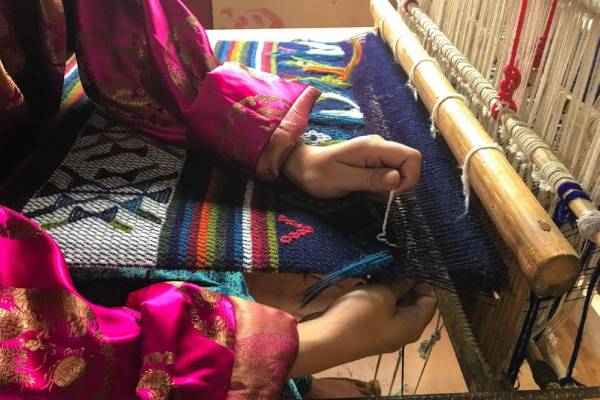
| Thagzo | Textile weaving, the most celebrated Bhutanese craft |
| Tshemzo | Embroidery and appliqué, including giant thongdrels and traditional boots |
| Shagzo | Wood turning: lacquered bowls (dapa) and cups |
| Dezo | Paper making from the bark of the daphne shrub |
| Dozo | Masonry: stone walls and rammed-earth construction |
Thagzo: the art of weaving
Textiles are Bhutan's most treasured art and were once used to pay taxes. Women weave on backstrap, horizontal frame or card looms, creating intricate patterns that can take months to finish. Look for kishuthara, the richly brocaded silk kira from Lhuentse in eastern Bhutan, and mathra and yathra from Bumthang, woven from yak and sheep wool in bold geometric designs.
Lhazo: painting and thangkas
Painters follow strict rules of proportion and iconography passed down from master to student. Thangkas are painted on cotton with natural pigments and framed in silk brocade. They hang in temples and family altars as aids to meditation. The same painters decorate every dzong and lhakhang with auspicious symbols, dragons, clouds and lotus flowers.
Where to see and buy authentic crafts
- Institute for Zorig Chusum, Thimphu: watch young students learning painting, carving, embroidery and sculpture.
- Royal Textile Academy, Thimphu: a beautiful museum dedicated to Bhutanese weaving and royal textiles.
- Folk Heritage Museum, Thimphu: a restored 19th-century farmhouse showing traditional rural life.
- Chumey valley, Bumthang: family workshops weaving yathra by the roadside.
- Khoma village, Lhuentse: the home of kishuthara weaving, for travellers heading to the far east.
- Government-certified handicraft shops in Thimphu and Paro, where authenticity is guaranteed.
Buying antiques: Exporting antiques and religious objects from Bhutan is restricted. Buy from licensed shops, keep your receipts, and ask your guide if you are unsure about an item.
Souvenirs worth bringing home
Hand-woven textiles
Scarves, table runners, cushion covers and kira fabric.
Thangkas
Hand-painted religious art from certified artists.
Dapa bowls
Lacquered wooden bowls turned on traditional lathes.
Deh-sho paper
Handmade daphne-bark paper, cards and notebooks.
Frequently Asked Questions
What is Zorig Chusum?
Zorig Chusum means "the thirteen arts". It is the collective name for Bhutan's traditional crafts, including painting, weaving, carving, sculpture, metalwork and bamboo work.
Can I visit artisans at work?
Yes. We can include visits to the Institute for Zorig Chusum, weaving centres, paper factories and village workshops in your itinerary.
Last updated: 15 October 2026