"Gross National Happiness is more important than Gross Domestic Product." The Fourth King, His Majesty Jigme Singye Wangchuck, said this in the 1970s. The idea has guided every major decision in Bhutan since: roads, schools, forests and tourism alike.
What is Gross National Happiness?
Gross National Happiness (GNH) is a development philosophy. It holds that real progress happens when material and spiritual wellbeing grow together. Most countries judge success by GDP. Bhutan also asks whether people are healthy, educated, connected to their culture and community, living in a healthy environment and governed fairly.
GNH is not a slogan. It is written into the 2008 Constitution, which directs the state to "promote those conditions that will enable the pursuit of Gross National Happiness". The GNH Commission (now part of the national planning process) screens new policies against GNH criteria before they are adopted.
The four pillars
Sustainable & equitable development
Growth that reaches every village, with free healthcare and education for all citizens.
Environmental conservation
At least 60% forest cover is guaranteed by law. Today it is around 71%.
Preservation of culture
National dress, traditional architecture, language and festivals are actively protected.
Good governance
A peaceful transition to democracy, accountability and decentralised decision-making.
The nine domains of GNH
To turn the idea into something measurable, the Centre for Bhutan & GNH Studies surveys households across the country on nine domains:
- Psychological wellbeing
- Health
- Education
- Time use (balance between work, rest and family)
- Cultural diversity and resilience
- Good governance
- Community vitality
- Ecological diversity and resilience
- Living standards
The results help the government decide where to invest, for example whether a district needs better roads, more health workers or support for traditional crafts.
A carbon-negative country
Bhutan is one of the very few carbon-negative countries in the world. Its forests absorb more carbon dioxide than the whole country emits. Most of its electricity comes from clean hydropower, much of it exported to India. Plastic bags are banned, hunting and logging are tightly controlled, and more than half of the country lies within protected areas and biological corridors.
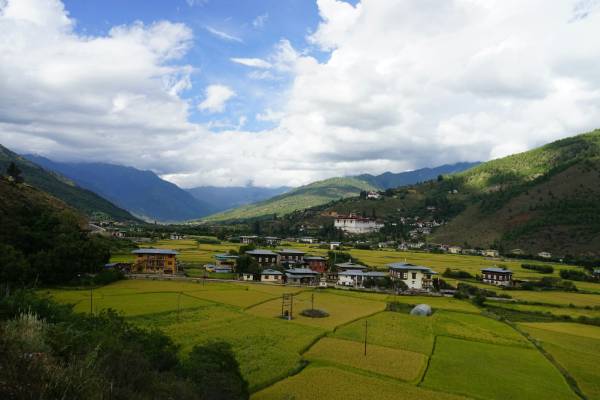
GNH and tourism: High Value, Low Volume
Bhutan's tourism policy grows out of GNH. Rather than mass tourism, the country welcomes travellers who respect its culture and environment. Every visitor pays a daily Sustainable Development Fee (SDF). The money helps fund free healthcare and education, forest conservation, carbon offsetting and training for young Bhutanese.
For you as a traveller, this means quiet monasteries, uncrowded trails, guides trained to share their culture with pride, and a sense that your visit is contributing to something good.
How you will feel GNH on your trip
- Office workers in gho and kira (national dress), worn proudly every working day.
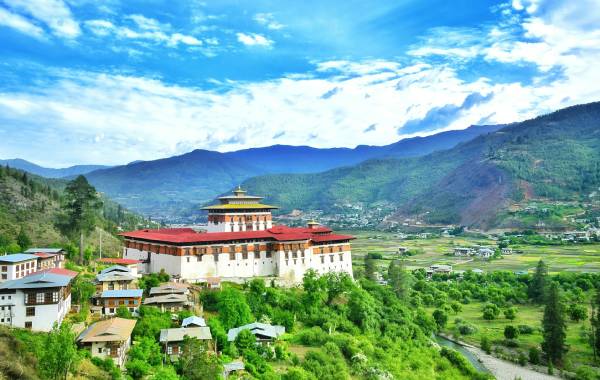
- Villages where traditional architecture is still the rule, not the exception.
- Unhurried conversations over butter tea, and a strong sense of community.
- Festivals that are genuine religious events, attended by whole families rather than staged for visitors.
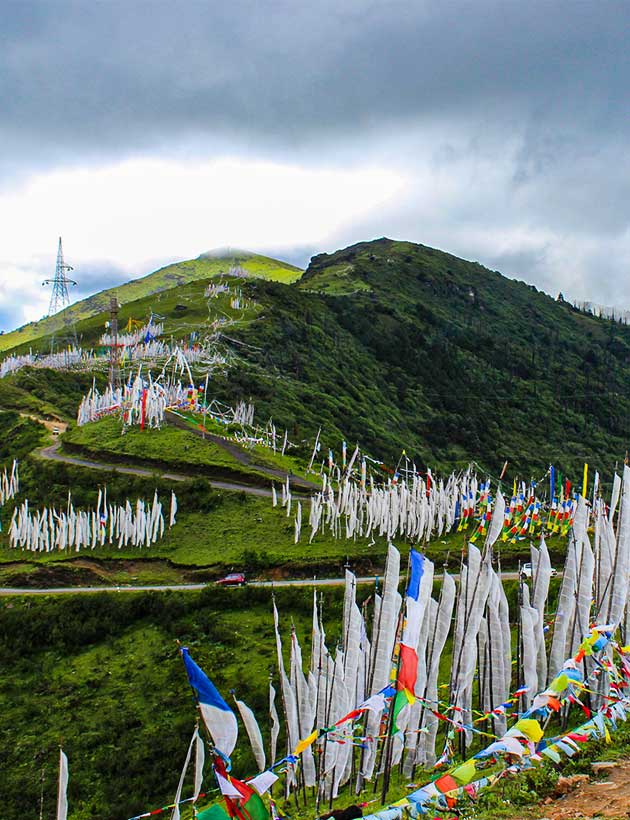
- Clean air, clear rivers and forests that run right up to the edge of towns.
The world takes note
In 2011 the United Nations General Assembly adopted a resolution, introduced by Bhutan, recognising "the pursuit of happiness" as a fundamental human goal and calling for a more holistic approach to development. This led to the International Day of Happiness, celebrated every 20 March. The idea of measuring wellbeing beyond GDP now influences policymakers and economists around the world.
Experience it yourself. Our cultural tours include farmhouse visits, conversations with monks and time in rural communities, so you can see what happiness means in Bhutanese daily life.
Frequently Asked Questions
Who introduced Gross National Happiness?
The phrase is credited to the Fourth King of Bhutan, His Majesty Jigme Singye Wangchuck, in the 1970s. The idea of putting the people's happiness first goes back further, to the Third King and to Bhutan's legal code of 1729.
Does GNH mean everyone in Bhutan is happy?
No. GNH is a guide for policy, not a claim that everyone is happy. Bhutan faces real challenges such as youth unemployment and migration to cities. GNH is about creating the conditions in which people can pursue happiness.
How does the SDF connect to Gross National Happiness?
The Sustainable Development Fee puts the "High Value, Low Volume" approach into practice. It funds conservation, healthcare, education and infrastructure, so tourism benefits Bhutanese communities and protects the environment.
Last updated: 15 October 2026